Thanks to this app recommendation you can know how to learn to play keyboard on mobile.
In fact, thousands of users have downloaded them, both for Android and iOS. In them, you will be able to choose hundreds of songs and modes.
Therefore, to help you understand more about how to learn to play keyboard on mobile, I prepared today's article on the subject. Interested in finding out more? So follow with me right now!
How to learn to play keyboard on cell phone?
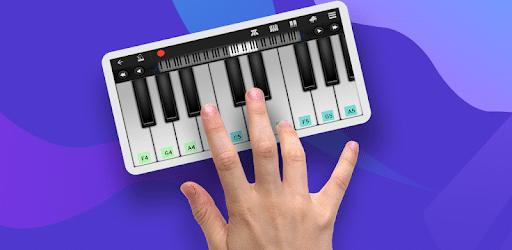
perfect piano
The developers of this app know that it's hard for you to have a piano in your living room. Therefore, they made this tool so that, on a smartphone or tablet, you can play the piano in a simple and intuitive way.
It's ideal for beginners, but intermediate or advanced pianists can also use this tool.
In addition, on YouTube there are thousands of videos of users of the application teaching other people how to play different songs and themes.
Yousician
The same goes for this app. Although you also have to have a piano or keyboard at home, you can use other keyboard simulation tools for your smartphone.
Use the tools technology gives you to find a way to turn your cell phone, tablet or even computer into a piano.
Includes step-by-step video tutorials in a fun way. Plus, the app will listen to you play to give you instant feedback on your accuracy and coordination. Without a doubt, one of the best apps to learn to play the piano on your cell phone.
Simply Piano
Simply Piano is another very interesting app for those who want to get into the keyboard world. It has several popular songs that can make your learning even more fun.
magic piano
Due to its aesthetic and stylistic resemblance to a music game, this application has become a real rage for iPhone users. It also has a points system that can be used to create competitions between friends.
With a wide variety of songs, Magic Piano is ideal for both those who want to learn and those who simply want to have fun and pass the time.
Pianist HD
Without a doubt, one of the apps that you should know about is Pianist HD. That's because, you can learn to play the keyboard at your own pace.
Therefore, if you are not very skilled and you are at the beginning of your training, you can learn slowly. has a variety of speeds to choose from, making it easy to adjust the level to your skill level.
In fact, with the keyboard, it's better to learn everything right slowly than to learn things wrong that can be difficult to eradicate later.
In addition, you can download and play more than 50 million songs, as well as having your own playlists.
like to know more about how to learn to play keyboard on cell phone So be sure to follow the other articles on the blog, I have many other news for you!
Check also:
See 5 apps to play guitar at home for Android
Simulate wall painting at home by cell phone
Memory full? Check out 3 Apps to clean your cell phone
What to look for before installing
- What is free. Many offer the first few lessons for free and charge for continuing. It's worth seeing how far the free portion goes.
- The certificate has an expiration date. Application certificates are rarely formally recognized. If the goal is a resume, confirm this beforehand.
- Content aligned with your objective. An app for conversation is different from an app for exams. Choosing one based on your goal will prevent you from giving up in the second week.
- It works offline. Studying while commuting requires downloading lessons beforehand, and not all apps allow this.
What these apps don't do
Before installing, it's worth managing your expectations: there are things that no app in this category delivers.
- Automatic translation within the app makes mistakes in context and slang; it serves as support, not as a definitive answer.
- Free content often covers the basics and stops right where the difficulty begins.
- They are not a substitute for formal courses when a recognized certification is required.
- Fluency is not guaranteed on its own: conversational practice with another person remains necessary.
Frequently Asked Questions
Is the certificate valid?
For personal use, yes. For formal job or institutional requirements, almost never—confirm before relying on it.
How much time per day?
15 to 20 minutes a day usually yields more results than two hours once a week, because spaced repetition is what makes it stick.
Is it possible to learn solely through the app?
You can go a long way in terms of vocabulary and comprehension. But to speak naturally, practice with another person remains irreplaceable.
Is it suitable for children?
Many have a kids' mode. It's worth checking the rating and whether there's advertising within the app.
Is the premium version worth paying for?
It makes sense when you've already established the habit and the free content has run out. Paying before establishing the routine usually results in a forgotten subscription.
Step-by-step to get started
- Redo what you did wrong. Reviewing the error yields more results than moving forward. Several applications have a specific section for this.
- Define the objective before choosing. Conversation, tests, or vocabulary require different apps. Choosing based on your goal avoids giving up in the second week.
- Reserve a fixed and short time slot. Fifteen to twenty minutes a day yields more results than two hours on Sunday, because spaced repetition is what makes it stick.
- Download the lessons for transportation. When the app allows it, leave the content ready on Wi-Fi.
Traps that catch almost everyone
- Having the certificate from the application is a formal requirement for employment or institutional purposes.
- Studying only for recognition and never producing — without speaking and writing, fluency will not come.
- Switching apps every week and starting from scratch every time.
- Confusing a sequence of days with learning — gamification measures consistency, not mastery.
What the cell phone itself already does.
Google Translate and the system's own translator work offline after downloading the language, and translate via camera and real-time conversation. For resolving specific doubts during study, it solves the problem without installing anything else.
What the screen doesn't teach you on your finger
A keyboard displayed on a cell phone screen reproduces the pitch of notes, but it doesn't reproduce the instrument. There are three things missing that the body needs to learn.
Missing weight. A real keyboard key offers resistance and returns the finger's movement. The screen is a smooth surface, and the muscle doesn't develop the strength or control of intensity.
Missing actual distance between keys. On a cell phone screen, an entire octave fits into a few centimeters. The hand closes in a position that doesn't exist on the instrument. When sitting at a real keyboard, the necessary opening is much greater, and the hand doesn't know where to go.
Missing memory of the movement. Playing well depends on the finger knowing the distance to the next note on its own, without the person looking. This learning is tactile, and only happens with raised edges, with the edges of the key, with the black key at a different level than the white one.
The result is well-known: those who study only on screens develop their ear, rhythm, and reading skills, but then freeze up the first time they sit down at an instrument. Musical knowledge comes; motor skills do not.
The "falling keys" mode, where blocks descend across the screen, has the same problem and an added complication. It creates visual dependence on that format. The person can play the music fluently within the app but can't play anything outside of it because they've never read a chord chart or sheet music—they've only followed blocks. It's a useful game for coordination and fun, not a lesson.
Connecting a real keyboard to a cell phone
The cell phone ceases to be an instrument and becomes a tool when the physical keyboard comes into play. The bridge to this is MIDI.
MIDI doesn't transmit sound. It transmits information: which key was pressed, with what intensity, and when it was released. The phone receives this data, compares it to the exercise, and shows whether you hit the correct note at the correct time.
The physical connection is via USB. The phone needs a OTG adapter, This allows the port to function as a host and recognize a peripheral device. Without OTG, the keyboard is not visible.
On the software side, the application needs to accept MIDI input. Not all of them do, and it's worth checking this item in the description before investing in a cable and adapter.
Cables, power, and the Bluetooth problem.
Most keyboards with USB MIDI output use the connector USB-B, the same tall square printer. The required cable is USB-B to USB-A, connected to the OTG adapter, or a straight USB-B to USB-C cable.
Newer models already have a USB-C port, and in that case a USB-C to USB-C cable will do the trick.
Power is the detail that often gets overlooked. A USB-powered keyboard will draw current from the phone, and the device doesn't always deliver enough. The keyboard lights up and goes out, or nothing is recognized. The solution is to use the keyboard's own power supply or a USB hub with external power.
MIDI via Bluetooth exists and works, with the advantage of eliminating cables. The disadvantage is the delay in wireless transmission, which hinders timing exercises. For rhythm study, a cable is better.
Without MIDI: the cell phone as sheet music and metronome.
Anyone who already has a keyboard without a USB port doesn't need any of that to use the device to their advantage for studying.
- Support the cell phone on music stand From the keyboard, use the screen as a chord chart or sheet music, scrolling with your finger between the parts.
- Use the app as metronome, starting slowly and increasing the pace only when the passage is clean three times in a row.
- To record Study and listen later. Timing errors become evident when listening and go unnoticed while playing.
The order of study that the instrument requires.
Outside of the app, the sequence that forms the keyboard player is old and still valid.
- Posture and hand. Seat at the correct height, forearm parallel to the ground, fingers curled as if holding a ball, wrist relaxed. A locked hand creates tension and permanently limits speed.
- Middle C reference. Locate the group of two black keys in the middle of the instrument and use that as a starting point to find any note without counting from the beginning.
- Rhythm with metronome. Playing slowly and correctly is worth more than playing fast and awkwardly. The tempo picks up later.
- Major and minor chords. Learn the formation and practice switching between them until the movement becomes automatic.
- Cipher. With chords in hand, a huge repertoire opens up, because most popular music is written in this format.
- Scales. They come in to develop finger independence and prepare for improvisation and reading.
Regarding routine: short, daily practice yields better results than a long session once a week. Twenty minutes a day builds motor memory; three hours on Sunday tire the hand and the memory is forgotten until the following week.
The minimum physical instrument that serves
To truly study without overspending, three characteristics matter more than brand or features.
- Around 61 keys. Five octaves cover almost the entire early repertoire. Keyboards with 32 or 44 keys require transposing and become limiting early on.
- Touch sensitivity. The key responds more strongly when you press harder. Without this, you don't learn dynamics, and the touch becomes flat.
- Power supply. The battery dies in the middle of studying and causes the sound to fluctuate. Having your own power source avoids this annoyance.