
Have you ever imagined what yours would have been like? past lifeBefore continuing, a necessary warning: Past life apps are a joke.. They ask questions about tastes and personality and return a historical figure drawn from a pre-prepared script. There is no measurement, no prediction, and no scientific basis whatsoever for the result. It's entertainment, in the same spirit as a magazine quiz.
Once that's combined, you can have fun. The theme is also interesting in itself, and it's worth understanding where the idea comes from before installing anything.
The concept of past lives
Believing in past lives means believing that the human soul or spirit reincarnates in different existences throughout time. This belief is common in various spiritual and religious traditions, such as Hinduism, Buddhism, esotericism, and spiritualism.
According to this perspective, the actions and decisions made in this life affect the next reincarnation, providing lessons along the journey. Reincarnation also suggests that the purpose of life is spiritual growth and the evolution of consciousness.
Some people claim to recall past lives through hypnotic regression, meditation, or lucid dreaming. Others look for evidence in reincarnation case studies, such as children who seem to remember details of previous lives.
However, science has no evidence to confirm the existence of past lives. Although this belief may bring comfort and hope to many people, it is crucial to remember that it is an idea of faith, not a proven fact.
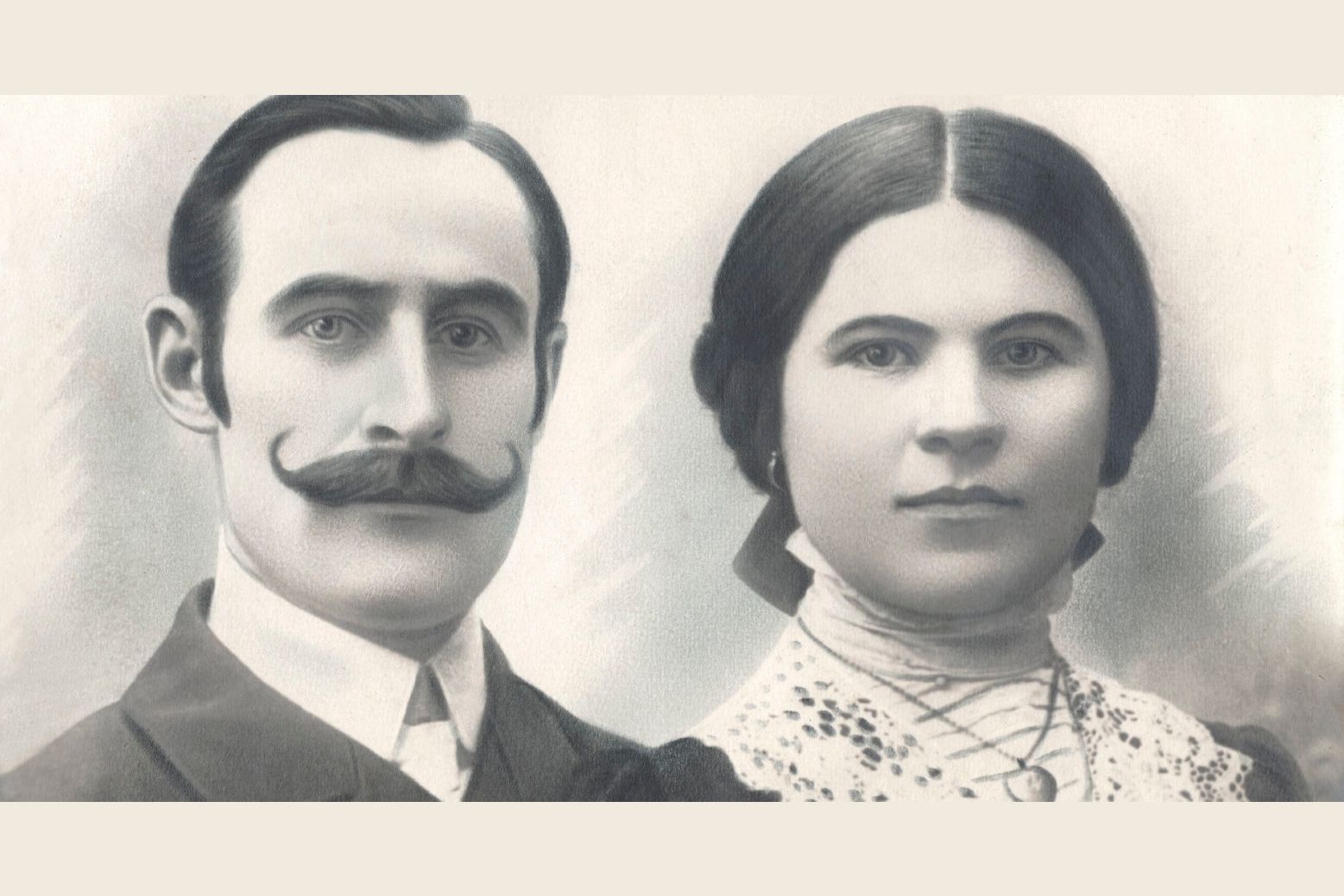
The app that plays this prank
Who were you in a past life? It's the most searched app of its kind in Portuguese. It's a questionnaire: you answer questions about personality, behavior, and preferences, and at the end you receive a "character"—a profession, a time period, a country.
What he actually is: This is an entertainment quiz. The answers fall into combinations pre-written by the developer; the app does not consult any records, does not analyze photos, and has no methodology behind it. Retaking the quiz and changing a single answer yields a different result.
Price: Free, with ads. Where to download: android. On the iPhone, an equivalent option is... Past Lives: Past Life, also free.
How to deal with the result
Take the test with your friends, compare the results, and laugh. What's not acceptable is using these answers to make decisions—about relationships, career, money, or health. Apps like these aren't based on evidence, and the app stores themselves classify them as entertainment.
If your interest in the topic is genuine, the path is different: seek out literature from the tradition that interests you, talk to people in your religious community, or read about the subject in reputable sources. Our identity and purpose are built by the choices we make in the present—and no mobile phone questionnaire can tell you who you were.
One last practical note: many of these apps ask for personal data, and some display aggressive ads or offer "complete readings" for a subscription. It's not worth paying for a random result. If the app insists on charging you, uninstall it.
Criteria that make a difference in the choice
- Permissions requested. An app should only request what it needs to function. Requests for access to contacts, messages, or accessibility without reason are a red flag.
- It works offline. If the task is local, requiring a connection means that your data is being sent to a server.
- Billing model. Check if it's free with ads, pay-per-view, or subscription-based — and the price range for in-app purchases.
- What the app actually does. Compare the description on the store page with recent reviews. The difference between the two often reveals what the advertisement omits.
What these apps don't do
It's important to know what's beyond the reach of this category—that's what avoids frustration and, most importantly, prevents falling for those who promise the impossible.
- They can't do what the device's hardware doesn't allow. A feature without a corresponding sensor doesn't exist in software.
- The free version often limits exports, applies a watermark, or restricts the number of uses per day.
- A high rating in the store doesn't guarantee quality: it's worth reading recent, negative reviews.
- An app that promises impossible results usually exists only to display advertising.
Frequently Asked Questions
Does it consume a lot of battery?
Check the usage per app in the settings and restrict background activity for any that are high.
Does it work without internet?
It depends: those that process on the device work offline; those that depend on a server require an internet connection.
Is it safe to install?
Download from the official store, check the developer, the date of the last update, and the permissions requested.
Is the app free?
Generally, the download is limited or may include advertising. Check the price range for in-app purchases on the store page.
Does it take up a lot of space?
The size appears in the store, but it increases with use due to caching. Clearing the cache frees up space without losing settings.
What to do, in order.
- Review your consumption after one week. In the settings, view battery and data usage by app and restrict any that are high.
- Try the free version before you pay. Check if the feature you want is outside the free plan—it usually is.
- Check if it works offline. If the task is local but still requires a connection, your data is being sent to a server.
- Check what the app asks for during installation. Compare the permissions with what it actually does. It's the quickest test of trustworthiness.
Where most people slip
- Installing multiple applications that do the same thing, all running in the background.
- Believing in a feature that the device's hardware does not support.
- Choosing based on average rating without reading recent negative reviews.
- Ignore the fact that the free version limits exports or applies a watermark.
Before installing: what's already on the device
It's worth opening the search in your phone's settings before installing: Android and iPhone already have several built-in functions, and the native app usually consumes less battery and doesn't ask for any permissions beyond what's necessary.
Where does the text that appears on the screen come from?
The app asks for very little: a date of birth, a name, sometimes a photo of your face. In a few seconds it returns a paragraph about who you might have been.
The underlying mechanism is simple. There's a list of pre-written descriptions, and the program chooses one of them. The choice can be a pure draw or a quick calculation based on the numbers of the entered date.
None of these steps consult historical records. There is no database of past lives to cross-reference with your name, because such a database was never built.
When a photo is used, the processing is usually aesthetic. The face is cut out and superimposed onto a painting or a period setting. This is image editing, not identification of anyone.
One detail reveals the system's design. Run the same application twice in a row, with the same data, and it's common to get a different character. The result, which changes with each touch, is random, not a reading.
The Barnum effect and the feeling of success.
The curious part isn't the drawing of lots. It's the impression that the text hit the nail on the head.
This impression has a name in psychology: the Forer effect, also called the Barnum effect. Descriptions that are vague enough, and favorable enough, are interpreted as personal by almost anyone.
The classic format is a phrase like "you're reserved with strangers, but you loosen up among friends." The phrase covers practically the entire adult population and yet it sounds like an individual portrait.
In 1948, psychologist Bertram Forer gave his students what he presented as a personality profile tailored to each of them. Everyone received the same text, word for word. The class rated the profile as very accurate.
Past life app texts follow this pattern. They speak of a courage that has yet to appear, of an old loss, of a talent that has gone unused. These are situations that almost every adult can fill with some personal memory.
Add to that a stylistic detail: the results are almost never unpleasant. No one receives "you were a mediocre person and no one missed you." The text praises, and praise lowers the reader's guard.
Confirmation bias ends the job.
After reading, the memory performs a silent sorting process. It retains the passage that resonated and discards what didn't.
This is confirmation bias. It's not a sign of naiveté or lack of education; it appears in everyone and works without us even realizing it.
In practice, a text with ten statements might contain two coincidences and eight phrases that don't describe you. The next day, what remains in your mind are the two coincidences. The person's calculation is "you got it right," when the actual score was different.
The same mechanism explains why the outcome seems to improve over time. The more someone repeats the story to friends, the more they adjust the details until everything fits together.
A homemade test to debunk the magic.
You can check all of this without leaving your couch, in just a few minutes:
- Run the app twice, with very different data, and compare the texts. If both apply to you, the text is not about you.
- Give a friend's results to another to read, without saying whose they are. Ask them how much they recognize in them.
- Before opening the results, write down on a piece of paper what you expect to find. Then compare. The overlap is usually significant.
- In the text you receive, count how many sentences describe you and how many do not. An honest assessment almost always disappoints.
- Read it again a week later. If the text alone didn't offer anything new, it never did.
When done in a group, this test usually generates more laughs than the app itself.
Full name, date of birth, and photo of your face.
There's a hidden cost to this game, and it's not mystical.
Full name combined with date of birth is the basis for a large portion of fraud attempts and account openings in the name of third parties. These two fields open doors in telephone support, registration, and access recovery.
Adding a clear photo of the face to that increases the potential damage. Facial images are used to create fake profiles and to test systems that perform facial recognition.
None of that is necessary for a text contest. If the app requires a full name, date, and selfie to return a paragraph, the product there is the registration, not the result.
Two simple measures reduce the risk: using a nickname or incomplete name and refusing camera and gallery permission. The randomly selected text will still be the same.
What's left when the magic fades?
Knowing how the trick works doesn't ruin the hobby. It changes what it is.
What actually happens is a narrative game. The app provides the beginning of a story, and each person completes the rest with their own imagination.
In a group, this works. One person receives the navigator role, another receives the healer role, and the group spends half an hour inventing how these two might meet. The fun is in the conversation, not in the revelation.
The boundary needs to be clear. Entertainment is not a diagnosis, it's not a prediction, and it doesn't serve as life guidance. Decisions about career, money, relationships, or health shouldn't be made based on a text randomly selected by an app.