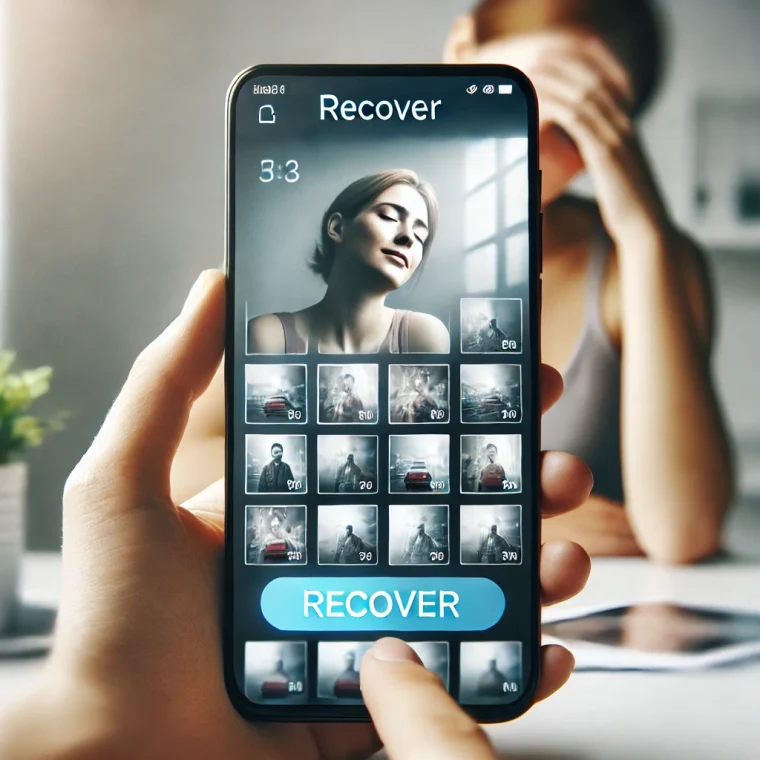
Let's start with the essentials: No app measures beauty.. What these apps do is measure symmetry and proportion between points on a face in a photo and transform that into a percentage. It's a mathematical filter, made for entertainment. There is no scientific standard of beauty, and the number that appears on the screen says absolutely nothing about anyone's appearance, worth, or attractiveness.
The best known of this type was the PrettyScale, launched in 2011 precisely as a joke, which ended up going viral. Today it's no longer on the Play Store; only the browser version remains, on the website. prettyscale.com. However, several substitutes with the same purpose appeared in the store. We tested some and explain below how they work — and why the results vary so much.
How does the app work?
The process is practically the same in all of them. The user chooses the gender, uploads a photo from the gallery or takes one on the spot, and aligns the face with the model shown on the screen. Then, they position markers at the corners of the eyes, the tip of the nose, the chin, and the hairline, following the instructions.
Using these points, the algorithm calculates distances and compares them to fixed proportions — the so-called "golden ratio" of the face. It's a geometric calculation, and nothing more. A frontal photo, well-lit and without tilting, gives more stable results, which is already a clue that the app is measuring the framing, not the person.
Two apps that perform this test.
Beauty Scanner – Facial Symmetry. It marks facial points and provides a symmetry reading with a side-by-side comparison. It's free, with ads and optional in-app purchases, and is available for... android.
What it is: A symmetry filter for entertainment purposes. It does not evaluate beauty nor does it replace any type of professional assessment.
Symmi – Facial symmetry. Instead of a grade, it mirrors both sides of the face and shows what the photo would look like if it were perfectly symmetrical. It's the most honest way to present the game, because it makes it clear that the subject is geometry. Free for android.
What it is: A digital mirror. Entertainment, with no diagnostic value whatsoever.
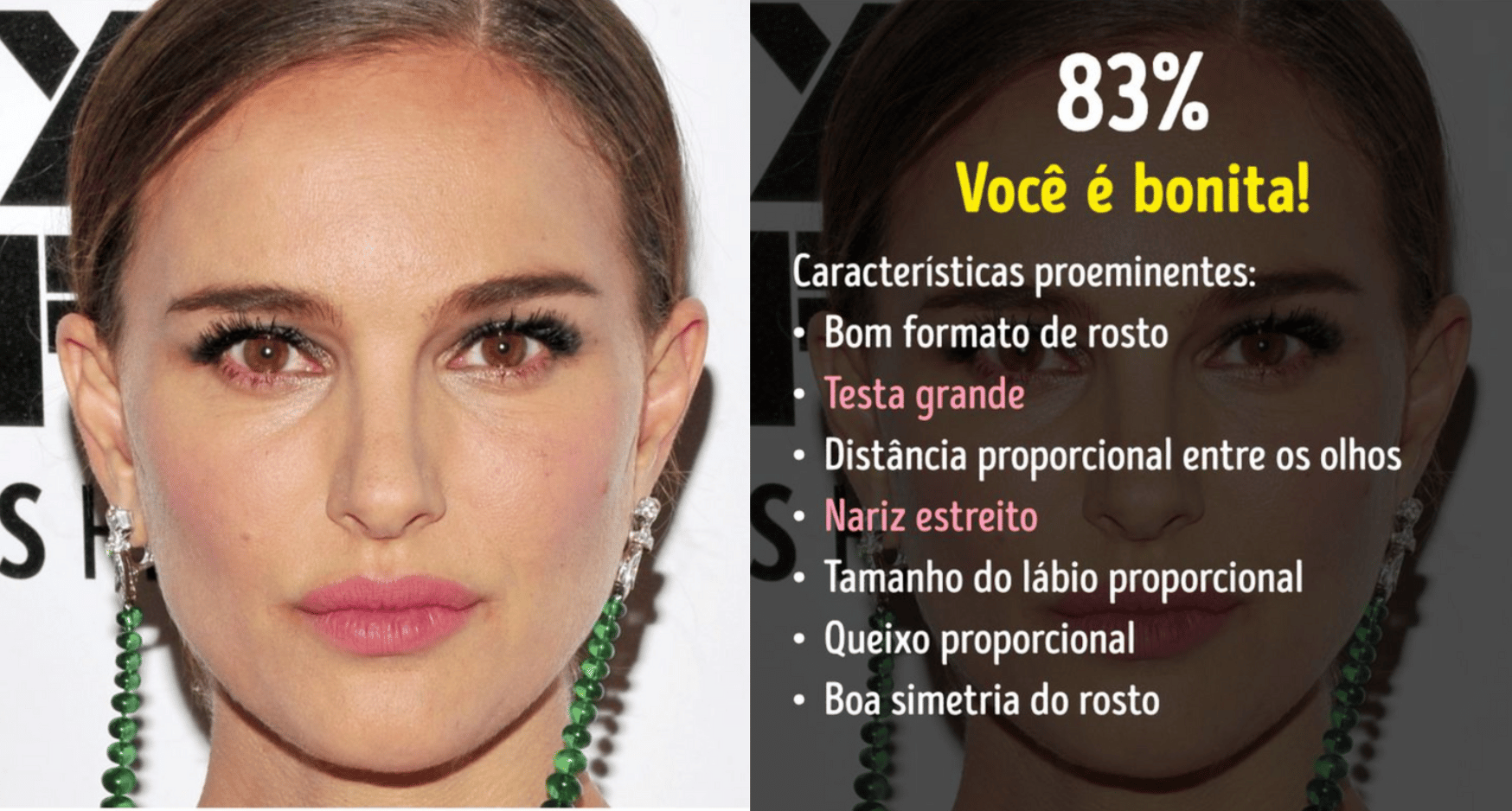
What we discovered when testing
- The result is very sensitive to the angle and position of the face: the same person, in two different photos, receives completely different percentages;
- Minimal changes in the position of the markers significantly alter the score, which shows that the assessment depends more on the framing than on the face;
- Standardized photos, like ID photos, always score better — again, because they are frontal and centered;
- Several of these apps include a warning in their text asking people with low self-esteem not to use the feature. This is a good sign that it's a joke, and that's how it should be viewed.
An important precaution
Do not use this type of app with photos of children and teenagers, nor to comment on the appearance of other people. A number generated by a filter should not become the subject of discussion about anyone's body, much less that of someone who is still developing. And, since the images are processed outside the phone, avoid sending photos of third parties without authorization.
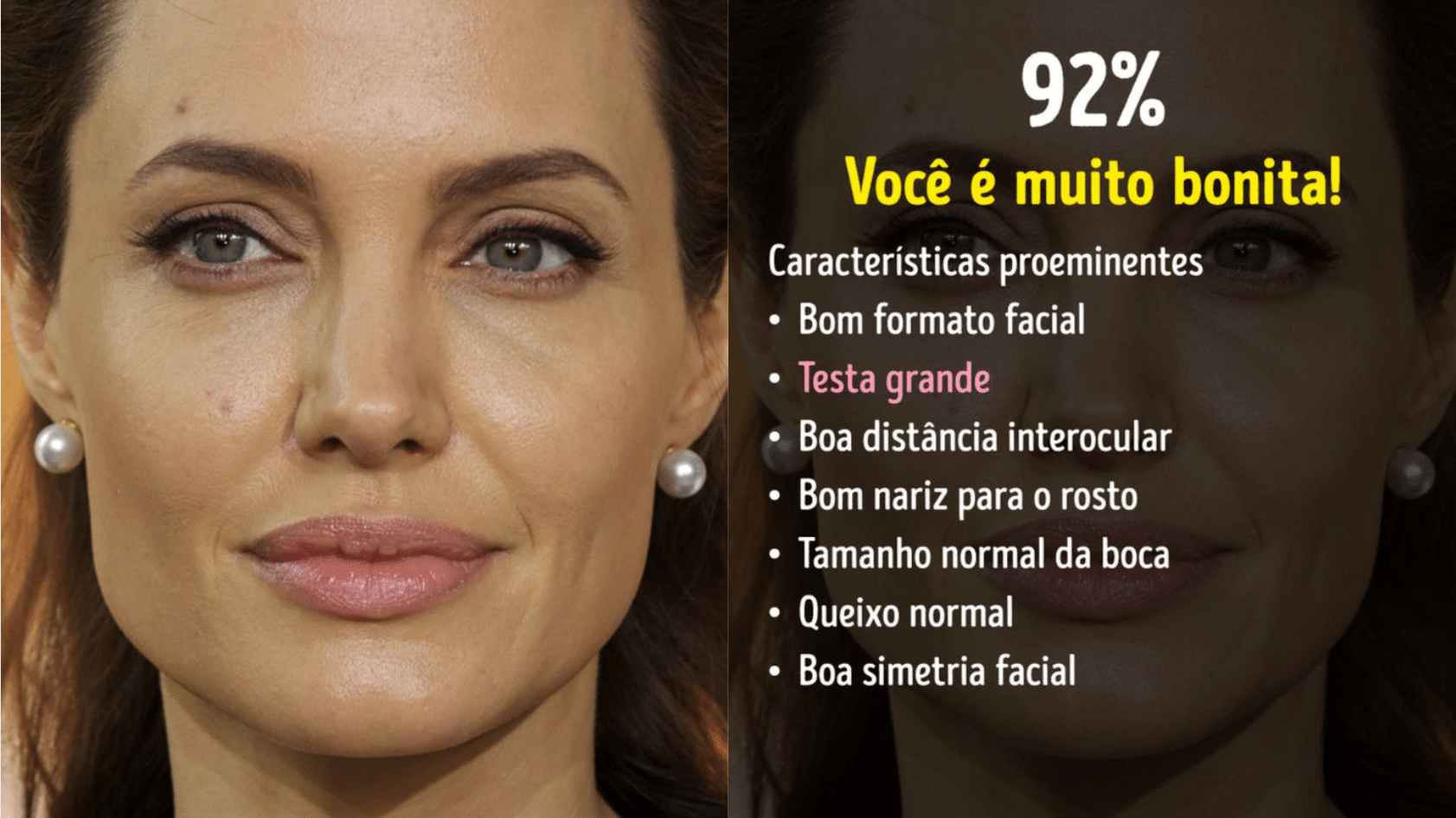
In short: if the goal is to laugh with friends at a random number, the apps do the job. If the expectation is to get some kind of serious evaluation of one's own appearance, none of them are suitable—nor do they claim to be.
Criteria that make a difference in the choice
- Permissions that the application requests. It's the quickest test of reliability. A flashlight app that asks for contacts and location doesn't need that to work.
- Does the system already do that?. Android and iOS both come with built-in flashlight, recorder, document scanner, meter, and QR code reader. It's worth checking before installing yet another app.
- Billing model. Check if it's free with ads, a one-time payment, or a subscription. Subscriptions for simple tasks rarely make sense.
- Update frequency. An app that hasn't been updated in over a year is likely to break with the next system version.
What these apps don't do
It's important to know what's beyond the reach of this category—that's what avoids frustration and, most importantly, prevents falling for those who promise the impossible.
- Features that rely on missing hardware won't work via software. Without the sensor, no application can solve the problem.
- They are not a substitute for professional equipment. Cell phone sensors are for estimation, not for technically precise measurements.
- No app actually increases battery capacity — what you can do is reduce consumption by turning off features.
- Apps that promise impossible functions are often advertising platforms, and some request permissions they shouldn't.
Frequently Asked Questions
Does it consume a lot of battery?
It depends on what's running in the background. Check the usage per app in the settings and restrict anything that's excessive.
How do I know if an app is trustworthy?
Look at the developer, number of reviews, date of last update, and permissions requested. Those four together say a lot.
Do I have to pay to use it?
In most utilities, no. The free version with ads works fine, and the paid version is for removing ads.
Does a cleaning app improve performance?
A little and for a short time. The real gain comes from uninstalling what you don't use and freeing up storage space.
Doesn't the cell phone already do that automatically?
It often does. Flashlight, recorder, document scanning, ruler, and QR code reader are native features in recent versions.
What to do, in order.
- Restart before concluding that it's slow. Much of the slowness disappears with a restart, without needing any application.
- Clear the cache of larger applications. You can do it app by app in the settings, without installing anything, and without losing your login or settings.
- Move photos and videos to the cloud. After confirming the backup, release the local copy. It usually returns several gigabytes.
- See what takes up space before installing a cleaner. In Settings › Storage, the system itself shows the breakdown by type. Almost always the culprits are video and social media cache.
Where most people slip
- Deleting an application folder through the file manager can result in lost data that cannot be recovered.
- Install three utilities that do the same thing, all running in the background.
- Granting accessibility permission to a utility that doesn't need it.
- Trusting an app that promises functionality without having the corresponding sensor on the device.
The alternative that is already included in the system
Android and iPhone already include features like a flashlight, voice recorder, document scanning, QR code reader, ruler, compass, level, and screen recording. Before installing, it's worth checking the settings – many people install what they already have.
What does the grade actually measure?
The beauty percentage app doesn't see faces. It marks reference points on the image: corners of the eyes, tip and base of the nose, corners of the mouth, contour of the chin and forehead.
With these points marked, the program calculates distances and ratios between them. Eye width in relation to face width, nose height in relation to total height, difference between the left and right sides.
Then it compares this set of numbers with a statistical model and returns a value. The grade is the result of a mathematical comparison between proportions, converted into a percentage to fit on the screen.
It's a legitimate geometric operation. What's missing is the bridge between that number and the idea of beauty, and it's precisely that bridge that the app sells.
Where does the average used in the comparison come from?
The model learned from a set of photos that someone had previously labeled. Real people looked at faces and gave ratings, or marked which ones they found most attractive, and the program looked for patterns in those choices.
This means that the returned score reflects the preference of the group that labeled that set. It is not a measure of the world, it is the average of a specific group.
- Ethnic bias: if the set has few faces from a particular group, the model scores poorly on features that it has seen little of.
- Age bias: sets assembled with photos of young people penalize expression lines and changes in facial features that come with time.
- Bias of the times: the taste recorded is that of the moment when the photos were labeled.
- Source bias: photos from social media have already been selected, edited, and filtered.
A decimal number on the screen gives the appearance of precision to a collective opinion with a date and address.
Why does the same person receive different grades?
Here's a simple test: take five photos in a row and submit them all. The ratings change. The person is the same; what changed was the image.
- Angle: a slight tilt of the head alters all measured distances between points on the face.
- Distance: a cell phone lens a few centimeters from the face magnifies what is closest to it. Nose and forehead appear larger, ears disappear. The same person photographed from a meter and a half away, with zoom, has very different proportions.
- Light: coming from above, it creates shadows under the eyes and accentuates the chin. From the front, it flattens the face.
- Expression: smiling affects the width of the mouth and the height of the cheek, two values used in the calculation.
A number that fluctuates with the position of the arm is not a measure of anything stable.
The golden ratio applied to the face is a selling point.
Many of these apps cite the golden ratio, that number close to 1.618, and draw masks over the photo to show how closely the face matches it.
The number exists in mathematics and appears in some growth patterns in nature. What doesn't hold up is the idea that faces considered beautiful converge towards it.
The masks work because whoever designs them chooses where to place the lines. By shifting the starting point a few millimeters, almost any face either fits or doesn't fit. It's measurement with a pre-selected result.
There is another argument that refutes the idea of an objective standard without needing mathematics: beauty standards change by culture and by decade. Traits valued in one country are indifferent in another. The body and face celebrated in each generation change from decade to decade, even within the same country. None of this aligns with a universal yardstick.
When play stops being play.
Among adults who know what they're doing, the test lasts thirty seconds and ends in a joke. The problem arises when the person receiving the grade takes it seriously.
Teenagers are constructing their own image and are the most exposed audience. A low grade from something that appears scientific carries more weight than a peer's opinion because it seems impartial. Combined with constant comparison to edited photos, this fuels dissatisfaction with their own appearance.
Some signs indicate that it has gone too far:
- Repeat the test several times, changing the photo until you get a better number.
- Save the note, compare it with those of friends, and return to the subject frequently.
- Avoid appearing in photos, deleting posts, or declining invitations because of your appearance.
- To stop going out, change habits, or lose sleep because of a detail about one's face.
When this happens, the best course of action is to talk to someone you trust, and if the discomfort persists, seek help from a mental health professional. Psychologists and psychiatrists deal with this type of suffering; no app can.
How to use without damaging it
You can have fun with the test knowing what it is. Some conditions help.
- Use it in a group, out loud, treating it like a game. What's harmful is testing it alone, in silence, late at night.
- Run the same photo through two different apps and compare them. Conflicting scores show in practice that there is no single measure.
- Repeat with photos at different angles and in different lighting, to see the number move.
- Do not install or encourage this type of test for children and adolescents without first discussing it with them.
- Do not use the score to decide on a cosmetic procedure. Surgery and intervention require consultation with a doctor, including indication and evaluation, never a response based on a percentage generated by a program that measured pixels.