
Discovering the origin of your surname can be a fascinating journey. Before you begin, however, it's worth understanding what this research is and what it isn't: Tracing a surname is a historical approximation, not a test of genetic ancestry.. The apps cross-reference birth, marriage, and death records, censuses, and immigration lists to show where that name came from and where it has been. Genetic ancestry can only be determined by laboratory testing, with a saliva collection kit sent by mail—no app can do this via mobile phone, neither with a photo nor by typing the surname.
There's a second important detail. The same surname often has several unrelated families, and many Brazilian surnames were adopted through adoption, marriage, baptism, or adaptation to Portuguese during immigration. In other words, the name tells only part of the story, and it needs to be confirmed with documents. Having made that point, let's look at the five best apps for this research.
Best Apps to Discover the Origin of Your Last Name
All the apps below are available in official app stores and work with document records. For each one, we indicate what you can do without paying, because almost all of them operate on a free model with an optional subscription.
MyHeritage
MyHeritage is one of the most comprehensive genealogical apps available. It allows you to create digital family trees and search for surnames in a large database of historical records, especially censuses, civil records, and old newspapers. It also offers tools for restoring and colorizing family photos, which often yield valuable discoveries when combined with documents.
The interface is user-friendly and makes it easy to add information to the tree. What's free: Basic account with a family tree of up to 250 people and some search functions. Exclusive records and advanced tools require a subscription. The company also sells a DNA test kit, purchased separately and processed in a laboratory — the app only displays the result afterward. Where to download: android It is iphone.
ancestry
Ancestry is another widely used app for tracing the origin of surnames. It offers a huge collection of historical records and allows you to build detailed family trees, with automatic suggestions of possible relatives as you fill in names and dates.
Its main advantage is the collection of documents: censuses, immigration records, and military documents, which help to trace the surname through the centuries. What's free: Create an account and build your family tree. Access to most documents requires a subscription. Where to download: android It is iphone.
FamilySearch Tree
FamilySearch is the most generous on the list: completely free, no subscription required. Developed by The Church of Jesus Christ of Latter-day Saints, it provides access to a gigantic database of historical records, including many digitized Brazilian and Portuguese parish registers—exactly the type of document that solves surname research here.
In addition to being free, it works collaboratively: the tree is unique and shared, so someone else may have already mapped the branch you are looking for. Where to download: android It is iphone.
Find a Grave
Find a Grave is a collaborative database of tombstones, with photos of gravestones and cemeteries from all over the world. It may seem like a small detail, but it's one of the most efficient tools for those researching surnames: the gravestone usually includes the full name, dates of birth and death, and often reveals relatives buried in the same grave.
It's a good way to confirm dates that you only knew from family memory. What's free: Everything — searches, photos, and contributions. Where to download: android It is iphone.
Family Gem
Family Gem is different from the others: it doesn't have its own database; it's a family tree editor that runs entirely on your phone, without cloud storage or registration. It serves to organize everything you've discovered in other apps and registry offices.
It imports and exports files in GEDCOM format, the genealogy standard, allowing you to transfer your family tree from one service to another without being tied to any subscription. It's free, open-source, and ad-free. Where to download: android.
Functionalities of Genealogy Applications
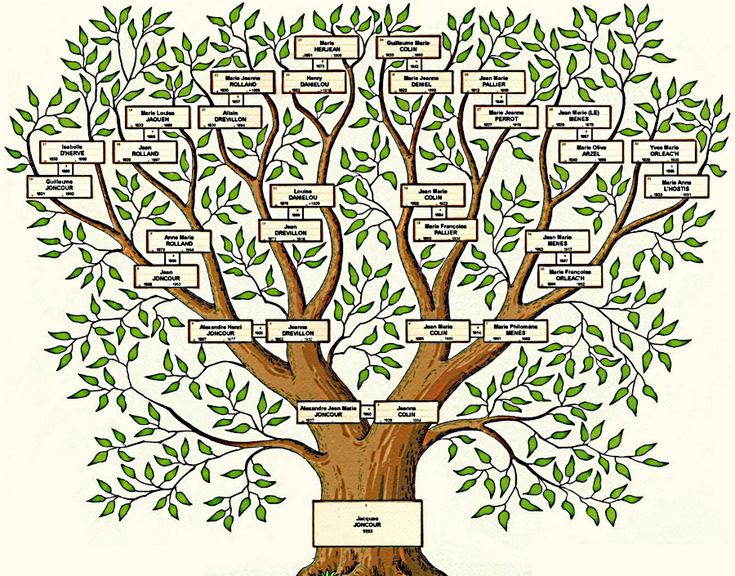
These apps share a set of features: access to digitized historical records, creation and visualization of family trees, and connection with other researchers studying the same surnames. Some automatically cross-reference what you type with already indexed records and suggest possible matches—which should always be checked against the original document, because the cross-referencing can be inaccurate.
It's worth repeating one point: when these services mention "DNA," they're referring to a separate product, a physical collection kit that you buy and send to a lab. The app doesn't analyze anything—it only shows the report after it's ready. No app deduces ancestry from the surname entered.
Where to begin in practice?
The work begins outside of your cell phone. Gather full names, dates of birth, and cities of your parents, grandparents, and great-grandparents, and look for birth certificates and old photos that the family may have kept. With this information at hand, FamilySearch handles a good portion of the search at no cost, and the other apps come into play when you want to delve deeper.
In Brazil, much information is still only available in registry offices and parish archives, outside of online applications. If the search gets stuck on a particular ancestor, the next step is usually to request the certificate directly from the registry office in the city where they lived.
Conclusion
Researching the origin of a surname is an experience that reveals a lot about your family history. With MyHeritage, Ancestry, FamilySearch, Find a Grave, and Family Gem, you have a complete set of tools: record databases, date verification, and a place to organize everything.
Just keep your expectations in check. What these apps deliver is documented history — names, occupations, cities, dates, and migration routes. It's far more interesting than a percentage, and has the advantage of being verifiable. Download one and start with the generation you know.
Before deciding, check these points.
- It works offline. Studying while commuting requires downloading lessons beforehand, and not all apps allow this.
- What is free. Many offer the first few lessons for free and charge for continuing. It's worth seeing how far the free portion goes.
- Content aligned with your objective. An app for conversation is different from an app for exams. Choosing one based on your goal will prevent you from giving up in the second week.
- Pace and time per session. Short daily sessions work better than weekly marathons, and some apps are designed for that purpose.
What these apps don't do
Every category has a limit, and knowing this one's limit saves time and money by avoiding those who promise more than what's available.
- Free content often covers the basics and stops right where the difficulty begins.
- Gamification helps with consistency, but obscuring the content with points and sequences can give the feeling of greater progress than there actually is.
- They are not a substitute for formal courses when a recognized certification is required.
- Automatic translation within the app makes mistakes in context and slang; it serves as support, not as a definitive answer.
Frequently Asked Questions
Is the premium version worth paying for?
It makes sense when you've already established the habit and the free content has run out. Paying before establishing the routine usually results in a forgotten subscription.
Is it suitable for children?
Many have a kids' mode. It's worth checking the rating and whether there's advertising within the app.
Is it possible to learn solely through the app?
You can go a long way in terms of vocabulary and comprehension. But to speak naturally, practice with another person remains irreplaceable.
How much time per day?
15 to 20 minutes a day usually yields more results than two hours once a week, because spaced repetition is what makes it stick.
Is the certificate valid?
For personal use, yes. For formal job or institutional requirements, almost never—confirm before relying on it.