First and foremost, a warning that applies to this entire article: no smartphone measures glucose. There is no cell phone with a sensor capable of detecting blood sugar, and no app replaces testing with a glucometer or guidance from your doctor. What the apps on this list do is something else entirely, and it's quite useful: they save the measurements you've already taken on the device, create graphs, remind you when to take your medication, and generate an organized report to take to your appointment.
It's a simple but important difference. The device measures. The app records. The healthcare professional who is monitoring you is the one who interprets the results and decides on any changes to your treatment.
Why doesn't the cell phone measure glucose?
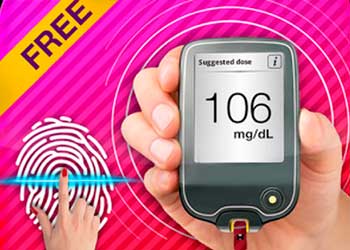
From time to time, an app appears promising to read blood sugar with your finger touching the camera and flash. It's worth understanding what really happens there: the camera detects the variation in light on the fingertip as the blood pulses. This gives, at best, an estimate of heart rate. Glucose has no color or visible signature through the lens of a regular cell phone.
In other words: any app that advertises itself as a "meter of glucose by The word "finger" is giving you a fabricated number or an estimate with no clinical value. Don't use this to adjust insulin, change meals, or decide if you need to seek medical attention. There are only two ways to truly measure insulin: using a blood glucose meter with a strip and a drop of blood, or a continuous glucose monitoring sensor prescribed by a doctor.
FreeStyle LibreLink: when your phone is just the reader.
The case of Abbott's FreeStyle Libre often causes confusion, so it's worth explaining properly. The measurement is done by a small sensor applied to the arm, which comes into contact with the interstitial fluid beneath the skin. This sensor is a medical device, purchased separately and prescribed by a professional—it doesn't come with the phone and isn't cheap.
The application FreeStyle LibreLink – BR Next, by placing the phone against the sensor, it reads the value the sensor has measured via proximity (NFC) and saves it in the history. The phone is just the screen and the notepad. Without the sensor on your arm, the app shows nothing. The download is free on Google Play and the Brazilian App Store, but that doesn't make the system free: the cost is in the sensor.
How to use the FreeStyle LibreLink app
Step 1. Download FreeStyle LibreLink – BR from the official store. It's available for Android and iPhone, and your device needs to have NFC working.
Step 2. Create an account and confirm that you already have a sensor applied, as instructed by the person who recommended the device.
Step 3. Bring your phone close to the sensor to take a reading. The value read will be automatically saved to the app's history.
What is recorded in the app
• Charts and reports for the period, ready to display in the query;
• History of readings, with date and time of each one;
• Notes on food intake, insulin dosage, and exercise, typed by you;
• Trend arrows, which indicate whether the value is rising, falling, or stable;
• Sharing with LibreView or with a family member via the LibreLinkUp app, which is also free and available in both app stores — the other person will only be able to see the data after you send the invitation.
It's worth reiterating the obvious: these resources organize information. They don't diagnose, adjust dosages, or tell you if everything is alright. That's the responsibility of the healthcare team.
Blood glucose diary on your cell phone.
Diary apps for those who use a standard glucometer.
If you measure with a tape measure and a drop of blood, like most people, your cell phone is still very helpful—as a digital notebook. Here are three options available in official app stores and free to download:
mySugr — Control your diabetes! (mySugr GmbH). You enter the value shown on the glucometer, along with meal, insulin, and mood data, and the app compiles the history. It's available for Android and iPhone. It's free, with in-app purchases; the PRO version, with extra reports, is a paid subscription.
Glyc – Diabetes and Blood Glucose. A Brazilian app, in Portuguese, designed to track blood glucose, carbohydrate intake, and insulin doses, with reminders and graphs. It's free on Google Play and the Brazilian App Store.
Diabetes:M (Sirma Medical Systems). The most complete of the three in terms of number of fields: it records blood glucose, food intake, insulin, weight, and blood pressure (as noted by you), in addition to generating detailed reports. Free in both stores, with in-app purchases for advanced features.
How to choose between them
There's no point in choosing the app with the most features if you're not going to use it. The best diary is the one you can keep every day. If you have a busy routine, start with the simplest one, with two or three fields. If your treatment involves carbohydrate counting and multiple doses, then a more detailed app is worthwhile.
Another practical point: ask during the consultation what format the professional prefers to receive the report. Many people waste time filling out an entire app and arrive at the office with a report that no one can read. A simple PDF with the date, time, and price usually suffices.
Where to download
Always download from your device's official app store. View FreeStyle LibreLink on Google Play or View on the App Store. The others are there too: mySugr on Google Play, Glic on Google Play It is Diabetes:M on Google Play.
Avoid APK files sent through messaging groups and download sites. These applications handle health data, and a tampered version poses a serious privacy issue.
Finally, repeating what the text begins with: this content is for informational purposes only and does not replace consultation, diagnosis, or treatment by a healthcare professional. If you feel unwell, your reading is significantly different from your normal level, or you have doubts about dosage, seek medical attention. Did you find any outdated information on this page? Write to contato@moblander.com.
Criteria that make a difference in the choice
- What the app actually does. Recording information is different from measuring. Health apps organize data that you or a device provide.
- Export for the doctor. A report in PDF or spreadsheet format makes the consultation much more productive.
- Who developed it?. Give preference to apps from healthcare institutions, universities, or companies with an identified technical manager.
- Integration with certified device. When there is a real measurement, it comes from equipment with a sanitary registration — the app only receives the number.
The limits: what no app does
It's important to know what's beyond the reach of this category—that's what avoids frustration and, most importantly, prevents falling for those who promise the impossible.
- Estimates of steps, calories, and sleep are approximations based on motion sensors, with a significant margin of error.
- An app that promises to detect disease through photos, sounds, or questionnaires is not supported by any evidence — seek professional help.
- The cell phone does not measure blood pressure, glucose, body temperature, nor does it perform imaging tests. There is no sensor for that in the device.
- They are not a substitute for prescribed medication or treatment, and should not be used to guide dose changes.
Frequently Asked Questions
Is there an app that detects disease?
Not reliably. Screening tools may suggest seeking care, but they don't diagnose.
Can I stop taking the medication if my numbers improve?
No. Any change in treatment needs to be decided with the professional who is following the case.
Is step counting reliable?
It's an estimate. It serves to track trends over time, not as an exact measurement.
Is my health data protected?
It depends on the app. Read the privacy policy and check if there is any sharing with advertisers and if it's possible to delete your browsing history.
Is this something I need to take to the doctor?
Yes, and that's its greatest benefit: an organized history with dates and values greatly shortens the search time.